
Covered Electric Bike: What Are Your Options in 2026?
You want to ride an e-bike, but you do not want to arrive at work soaked, sunburned, or frozen. You are looking for a covered electric bike — something with weather protection that still gives you the benefits of cycling. But what exactly is available? The covered e-bike market ranges from simple $30 rain capes to fully enclosed velomobiles, and understanding the spectrum is essential to choosing the right option for your needs.
In this comprehensive guide, we walk through every category of covered bicycle solution available in 2026, compare their pros and cons, and explain why purpose-built enclosed e-bikes like the Veemo SE represent the best balance of weather protection, practicality, and cost.

The Spectrum of Weather-Protected Cycling
Before diving into details, it is helpful to understand the full range of options. Weather-protected cycling solutions fall along a spectrum from minimal to complete coverage:
- Rider-worn rain gear — Rain jackets, pants, shoe covers
- Aftermarket rain covers and capes — Poncho-style covers that drape over rider and handlebars
- Windshields and fairings — Bolt-on shields that block front wind and rain
- Canopy systems — Roof-like structures mounted above the rider
- Semi-enclosed bikes — Partial enclosures with open sides or back
- Fully enclosed velomobiles — Complete cabin surrounding the rider
Option 1: Rider-Worn Rain Gear
The most basic approach to weather-protected cycling is simply wearing waterproof clothing.
What It Includes
- Waterproof cycling jacket ($50–$300)
- Rain pants or leg covers ($30–$150)
- Waterproof shoe covers ($20–$60)
- Waterproof gloves ($25–$80)
- Helmet cover ($10–$25)
Cons: You still get wet from condensation and sweat inside waterproof layers. Face and eyes remain exposed to rain. No wind chill protection beyond the jacket. Does nothing for road spray from below. You arrive at work needing to change clothes. Provides zero protection from cold temperatures.
Best for: Occasional rain riding, riders who already own a bike and want the cheapest possible weather protection.
Option 2: Aftermarket Rain Covers and Capes
A step up from standard rain gear, these products attach to the bike and/or rider to create a larger protective surface.
What Is Available
- Cycling rain capes — Large ponchos that drape over the handlebars and rider, creating a tent-like cover ($30–$80)
- Handlebar-mounted shields — Clear plastic shields that clip to handlebars to block front spray ($20–$50)
- Leg/body covers — Fabric covers that attach to the saddle and handlebars, wrapping around the rider's lower body ($40–$100)
Pros: Affordable, more coverage than standard rain gear, some designs allow ventilation, portable.
Cons: Caught by wind, limited visibility in heavy rain, do not protect from cold, look awkward, poor durability, no protection from rear or side spray.
Best for: Budget-conscious riders in mild climates with occasional light rain.
Option 3: Windshields and Fairings
Bolt-on windshields and aerodynamic fairings provide rigid wind and rain protection for the front of the rider.
What Is Available
- Universal e-bike windshields — Clear polycarbonate or acrylic shields that mount to handlebars or stem ($50–$200)
- Recumbent bike fairings — Aerodynamic nose cones for recumbent bikes and trikes ($200–$800)
- Custom-fitted front fairings — Purpose-designed shields for specific bike models ($100–$400)
Pros: Blocks headwind reducing wind chill significantly, deflects front-facing rain and spray, improves aerodynamics, rigid construction withstands wind better than fabric covers, relatively affordable.
Cons: Front protection only — rain from sides, above, and behind still reaches rider. Fogging in cold or humid conditions. Adds width. Can vibrate and rattle at speed. No protection from cold below the shield.
Best for: Riders primarily concerned about headwind and front-facing rain, especially recumbent cyclists. For a structured overview of what to evaluate in any e-bike purchase, the EbikeBC buying guide is a helpful starting point.
Option 4: Canopy Systems
Canopy systems add a roof-like structure above the rider, providing overhead rain protection while leaving the sides open.
What Is Available
- Bike canopy kits — Lightweight frame-and-fabric canopies that mount above the rider ($200–$600)
- Rigid roof systems — Hard-shell roof panels on a frame ($400–$1,200)
- Umbrella-style systems — Adjustable umbrella mounts for bicycle handlebars ($20–$80)
Pros: Overhead rain protection without full enclosure, some sun protection, maintains airflow, removable in good weather.
If a canopy fails at speed, it becomes a hazard. Most canopy systems are not engineered for crash protection and can create dangerous situations in strong crosswinds. They raise the center of gravity on a two-wheeled platform — exactly the opposite of what you need in wet, slippery conditions.
Best for: Low-speed riding in light rain, delivery cyclists in warm climates, or recreational use.
Option 5: Semi-Enclosed Bikes
Semi-enclosed bikes feature partial enclosures — typically covering the front and top while leaving the rear or sides open.
What Is Available
- Partial-fairing recumbent trikes — Recumbent tricycles with front and top fairings ($2,000–$6,000)
- Semi-enclosed cargo bikes — Cargo bikes with partial weather covers over the rider position ($1,500–$4,000)
- DIY enclosure kits — Custom-built partial enclosures for existing bikes and trikes ($500–$2,000 in materials)
Pros: Significantly better weather protection than any add-on solution, often built on three-wheel platforms (stable), partial airflow prevents overheating, better aerodynamics than canopy systems.
Cons: Incomplete protection — rain and wind still enter through openings. Not suitable for heavy rain or winter conditions. Expensive compared to add-on solutions. DIY builds have quality, safety, and durability concerns. Limited availability in North America.
Best for: Riders in moderate climates who want meaningful weather protection without full enclosure, and who are willing to invest more than add-on solutions.
Option 6: Fully Enclosed Velomobiles and E-Trikes
At the top of the spectrum are fully enclosed vehicles — purpose-built machines that surround the rider in a complete cabin. This is where the Veemo SE and Veemo LT sit.
What Is Available
- Veemo SE — Fully enclosed, pedal-assist electric trike designed for urban commuting. Canadian-designed, e-bike classified.
- Veemo LT — Fully enclosed, pedal-assist electric trike designed for cargo and last-mile delivery.
- Traditional velomobiles — Fully enclosed recumbent trikes (Sinner, Quest, etc.) — primarily human-powered, expensive ($8,000–$15,000+), designed for speed enthusiasts.
- Other enclosed e-trikes — A small number of manufacturers produce enclosed electric trikes, though availability in North America is limited. EbikeBC is a good resource for assessing what is available locally.
Pros:
- Complete weather protection from all directions
- Ride in regular clothes year-round
- Three-wheel stability (no balance required)
- Integrated lighting, signals, and storage
- Pedal-assist provides exercise without excessive effort
- E-bike classification means no license, registration, or insurance
- Bike lane access
- Aerodynamic design (less wind resistance than canopy or semi-enclosed options)
- Battery protected from cold weather
- Highest level of safety among all bicycle-type vehicles
Cons: Higher purchase price than add-on solutions, larger footprint than a standard bicycle (though much smaller than a car), cannot be easily carried upstairs or onto transit, limited top speed (32 km/h with motor assist, per e-bike regulations).
Daily commuters who want true all-weather, all-season cycling. Delivery businesses seeking weather-protected cargo bikes. Anyone who wants the practical benefits of cycling without the weather-related downsides. Visit the Veemo FAQ for real owner use cases.
Complete Comparison: All Covered E-Bike Options
| Feature | Rain Gear | Rain Covers | Windshield | Canopy | Semi-Enclosed | Fully Enclosed (Veemo) |
|---|---|---|---|---|---|---|
| Rain Protection | Partial | Moderate | Front only | Top only | Good | Complete |
| Wind Protection | Minimal | Minimal | Front only | Minimal | Moderate | Complete |
| Cold Weather Use | Poor | Poor | Poor | Poor | Fair | Good |
| Road Spray Block | Partial | Partial | Front only | None | Moderate | Complete |
| Stability | Same as bike | Reduced (wind) | Same as bike | Reduced (wind) | Better (if trike) | Excellent (3 wheels) |
| Setup Time | 5–10 min | 2–5 min | Permanent | Permanent | None | None |
| Arrive Presentable? | No | Maybe | No | Maybe | Usually | Yes |
| Year-Round Viable? | No | No | No | No | Sometimes | Yes |
| Cost | $135–$615 | $30–$100 | $50–$800 | $200–$1,200 | $2,000–$6,000 | See veemo.ca |
| Requires Existing Bike? | Yes | Yes | Yes | Yes | No | No |
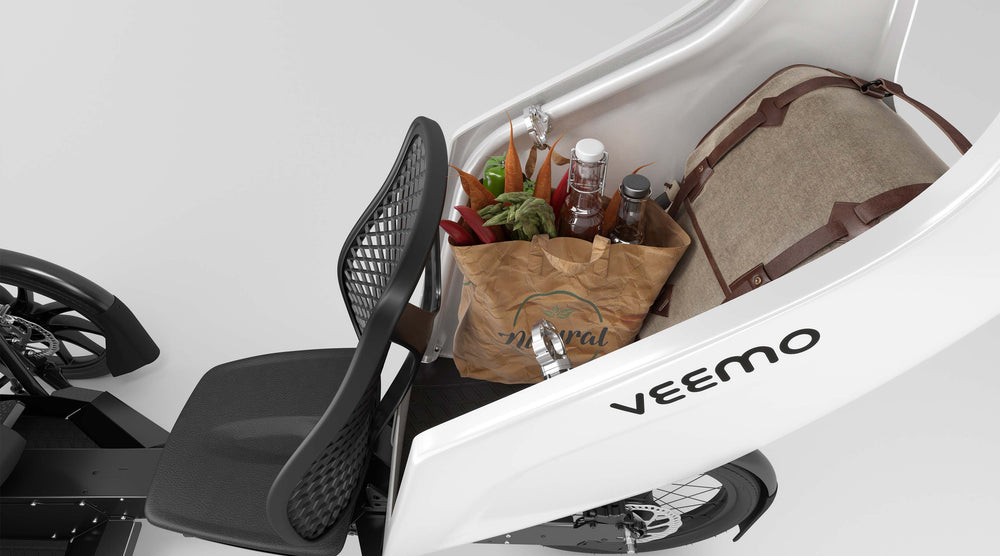
Why Purpose-Built Wins: The Case for Fully Enclosed E-Bikes
Looking at the comparison table, a pattern emerges: add-on solutions are always compromises. They take a vehicle designed to be open and try to retrofit weather protection onto it. The results are predictable — partial coverage, reduced stability, awkward aesthetics, and poor durability.
A purpose-built enclosed e-bike like the Veemo SE is designed from the ground up with the enclosure as an integral part of the vehicle. This means:
- The aerodynamics account for the enclosure — No awkward wind catches or sail effects.
- The stability accounts for the enclosure — Three wheels and a low center of gravity mean the enclosure adds protection without adding risk.
- The weather sealing is comprehensive — Not an afterthought bolted onto gaps it was not designed to cover.
- The weight distribution is optimized — Battery, motor, cabin, and rider weight are balanced by design. The drivetrain is engineered by ENVO Drive Systems.
- The lighting and visibility are integrated — Not clip-on accessories competing with the enclosure for mounting space.
Use Case Scenarios: Which Option Is Right for You?
Scenario 1: "I ride my e-bike in summer and want basic rain protection"
Best option: Rider-worn rain gear or a windshield/fairing. Low cost, keeps your existing bike, handles occasional rain. You will still default to the car on truly bad days, and winter riding is unlikely. Browse urban commuter e-bikes to see what standard options are available.
Scenario 2: "I want to bike commute year-round in a Canadian city"
Best option: Fully enclosed e-bike (Veemo SE). This is the only option that makes year-round commuting genuinely comfortable in Canadian winters. Rain, snow, wind, and cold are all handled. You arrive at work in office clothes.
Scenario 3: "I run a delivery business and need weather-protected cargo bikes"
Best option: Fully enclosed cargo e-trike (Veemo LT). Weather protection keeps delivery riders comfortable and productive through all seasons. Protected cargo area keeps packages dry. E-bike classification eliminates commercial vehicle costs — no commercial license, no commercial insurance, no fleet registration fees.
Scenario 4: "I ride recreationally and want more comfort on rainy days"
Best option: Windshield/fairing or canopy system. You are not riding daily, so the compromises of an add-on solution are acceptable. The lower cost is justified for occasional use.
Scenario 5: "I live in Vancouver or Victoria with mostly rain, not cold"
Best option: A fully enclosed e-bike is still the top choice for daily commuters — Vancouver gets 166 rainy days per year. But a good windshield plus rain gear can work if you are budget-constrained. The mild temperatures mean cold weather performance is less critical than in inland cities.
The Total Cost of Weather Protection: Beyond Purchase Price
When comparing options, it is tempting to focus only on purchase price. But the total cost of weather-protected cycling includes hidden costs that tip the calculation toward purpose-built solutions.
Hidden Costs of Add-On Solutions
- Replacement frequency — Rain capes and fabric covers wear out. Plan to replace them every 1–2 years ($30–$100/year).
- The bike underneath — You still need a quality e-bike ($1,500–$5,000) to attach the cover to.
- Days you drive instead — Every day the add-on solution is not good enough and you drive a car instead costs $15–$30 in gas, parking, and wear. Over a winter, that adds up to $500–$2,000+.
- Specialized winter gear — If you try to ride through winter with add-on solutions, you need expensive winter cycling clothing ($300–$900).
- Increased bike maintenance — Exposed bikes in winter weather need more frequent chain, brake, and drivetrain maintenance.
Total Cost Comparison Over 3 Years
| Cost Category | Add-On Solution + E-Bike | Fully Enclosed E-Bike (Veemo) |
|---|---|---|
| Base vehicle | $2,000–$5,000 (e-bike) | See veemo.ca for pricing |
| Weather protection add-ons | $200–$1,200 | $0 (integrated) |
| Winter cycling gear | $300–$900 | $0 (ride in regular clothes) |
| Replacement covers/gear (3 yrs) | $100–$300 | $0 |
| Days driving instead (3 winters) | $1,500–$6,000 | $0 (ride year-round) |
| Extra maintenance (salt, wet) | $200–$600 | Reduced (enclosed drivetrain) |
| 3-Year Total (Beyond Vehicle) | $2,300–$9,000 | Under $200 |
How to Choose: A Decision Framework
Ask yourself these questions to determine which covered e-bike option is right for you:
- How many days per year do you want to ride? If it is 365 days (or close to it), only a fully enclosed e-bike makes that practical in Canada.
- What is your commute distance? Under 25 km each way is ideal for an enclosed e-bike.
- Do you ride in winter? If yes (or if you want to start), fully enclosed is the clear winner. No add-on solution makes winter cycling comfortable.
- Is this for commuting to a professional workplace? If you need to arrive looking presentable without changing clothes, fully enclosed is the only option that reliably delivers.
- What is your budget? If budget is the primary constraint, start with rain gear and a windshield. Upgrade to fully enclosed when finances allow.

The Future of Covered Electric Bikes
The covered e-bike market is growing rapidly. Trends shaping the future include:
- Increasing urbanization — More people in cities means more demand for compact, weather-protected transportation.
- Climate awareness — Growing demand for zero-emission commuting options.
- Cycling infrastructure expansion — Protected bike lanes make enclosed e-trikes safer and more practical.
- Battery technology improvements — Longer ranges and faster charging make e-bikes viable for longer commutes.
- Remote work hybrids — People commuting 2–3 days per week are more willing to explore alternatives to car ownership.
Purpose-built enclosed e-bikes like the Veemo SE and Veemo LT are at the forefront of this trend — not as futuristic concepts, but as practical, available vehicles for today's commuters.
Frequently Asked Questions
Skip the Compromises.
The Veemo SE is a purpose-built covered electric bike that handles everything Canadian weather throws at you — every ride, every season.
Explore Veemo SE See Veemo LT