
What Is A Velomobile
Part bicycle, part enclosed vehicle, the velomobile occupies a unique space between cycling and driving — and interest in them is growing fast. This guide explains what a velomobile is, how they work, who rides them, what they cost, and whether one might make sense for your life. Prices range from $4,000 to $15,000+, and annual savings over a car can exceed $8,000 per year.
You have probably never seen one in person, but velomobiles are quietly changing how people think about urban transportation. No sales pitch here — just a thorough explanation of a vehicle category most people have never heard of.

Velomobile Definition: The Basics
A velomobile is a human-powered vehicle (HPV) enclosed in an aerodynamic shell. The name combines the French word "vélo" (bicycle) with "mobile." In its simplest form, a velomobile is a recumbent tricycle with a body around it.
Most velomobiles share these characteristics:
- Three wheels for stability (no need to balance)
- An enclosure or shell that protects the rider from weather and wind
- Pedals for human-powered propulsion
- Gearing system for different speeds and terrain
- Optional: Electric motor assist (increasingly common)
What sets a velomobile apart from a regular bicycle is the enclosure. What sets it apart from a car is the human power. A velomobile sits in the gap between these two — offering weather protection and stability like a car, with the exercise, low cost, and environmental benefits of a bicycle.
A Brief History of the Velomobile
Early Origins (1930s to 1940s)
The concept of an enclosed pedal-powered vehicle is older than you might expect. In 1933, French engineer Charles Mochet built the "Velocar," a lightweight enclosed pedal car that gained brief popularity in France. During World War II, when gasoline was scarce, similar vehicles appeared across Europe as practical transportation alternatives.
The Recumbent Revolution (1980s to 1990s)
Modern velomobiles trace their lineage to the recumbent bicycle movement of the 1980s. Dutch and German engineers began adding fairings (streamlined shells) to recumbent trikes, discovering that the aerodynamic advantage was enormous. A faired recumbent trike could match or exceed the speed of a racing bicycle with less effort.
The first modern production velomobile was the Leitra, designed by Carl Georg Rasmussen in Denmark in 1980. Dutch manufacturers like Velomobiel.nl followed with the Quest in the early 2000s, which became the most popular velomobile worldwide.
The Electric Era (2015 to Present)
The explosion of e-bike technology transformed the velomobile category. Adding electric assist made velomobiles practical for everyday commuters, not just cycling enthusiasts. Companies like Veemo, Organic Transit (ELF), and Better Bike (PEBL) introduced upright-seating electric velomobiles designed specifically for urban commuting rather than speed or touring.
The shift from "niche cycling toy" to practical transportation is the defining trend of the current velomobile era. Today, more velomobiles are sold for commuting than for sport.
Types of Velomobiles
Traditional Recumbent Velomobiles
The classic velomobile design: a recumbent trike (reclined seating, legs forward) with a streamlined fairing. These are the fastest and most aerodynamically efficient velomobiles, capable of sustained speeds of 40 to 50 km/h on flat ground under human power alone.
Characteristics:
- Reclined seating position
- Very low to the ground (seat height 15 to 30 cm)
- Extremely aerodynamic
- Usually human-powered only (some add electric assist)
- Lightweight: 25 to 35 kg typically
- Two front wheels, one rear wheel (tadpole configuration)
Examples: Quest, Milan SL, DF, WAW, Quattrovelo.
Best for: Cycling enthusiasts, long-distance touring, speed record attempts.
Electric Commuter Velomobiles
The modern evolution: upright seating, electric pedal assist, and practical features like cargo space, doors, and automotive-style lighting. These are designed for daily transportation rather than sport.
Characteristics:
- Upright seating position (like a regular bicycle or chair)
- Higher off the ground (better visibility in traffic)
- Full or partial enclosure for weather protection
- Electric pedal-assist motor (250W to 750W)
- Heavier: 55 to 90 kg typically
- Cargo capacity for daily errands
Examples: Veemo SE, Veemo LT, PEBL, ELF, Podbike Frikar.
Best for: Daily commuters, older adults, car-replacement seekers, anyone prioritizing practicality over speed.
| Type | Weight | Speed | Motor | Best Use | Price Range |
|---|---|---|---|---|---|
| Recumbent (human-powered) | 25–35 kg | 40–50 km/h | None | Sport, touring | $8K–$15K+ |
| Electric commuter | 55–90 kg | 25–32 km/h | 250–750W | Daily commuting | $5K–$12K |
| Cargo velomobile | 65–100 kg | 25 km/h | 250–500W | Delivery, hauling | $6K–$14K |
| DIY / Kit | Varies | Varies | Optional | Budget builds | $1.5K–$5K |
Cargo Velomobiles
Designed to carry heavy loads, these velomobiles prioritize payload capacity over speed or aerodynamics. They are increasingly used for commercial deliveries in European cities. Payload capacity of 50 to 150 kg. Electric assist is standard. Best for commercial delivery, family transport, and heavy grocery runs.
DIY and Kit Velomobiles
For the hands-on builder, several companies sell velomobile kits or plans. Price range: $1,500 to $5,000 for kits, plus significant build time (40 to 200+ hours). Best for mechanically skilled builders who want a velomobile on a tight budget.
Advantages of Velomobiles
Weather Protection
The most obvious advantage. A fully enclosed velomobile keeps you dry in rain, warm in cold, and shielded from wind. For riders in cities like Vancouver, Seattle, Toronto, or Montreal where weather stops many people from cycling year-round, this single feature justifies the investment.
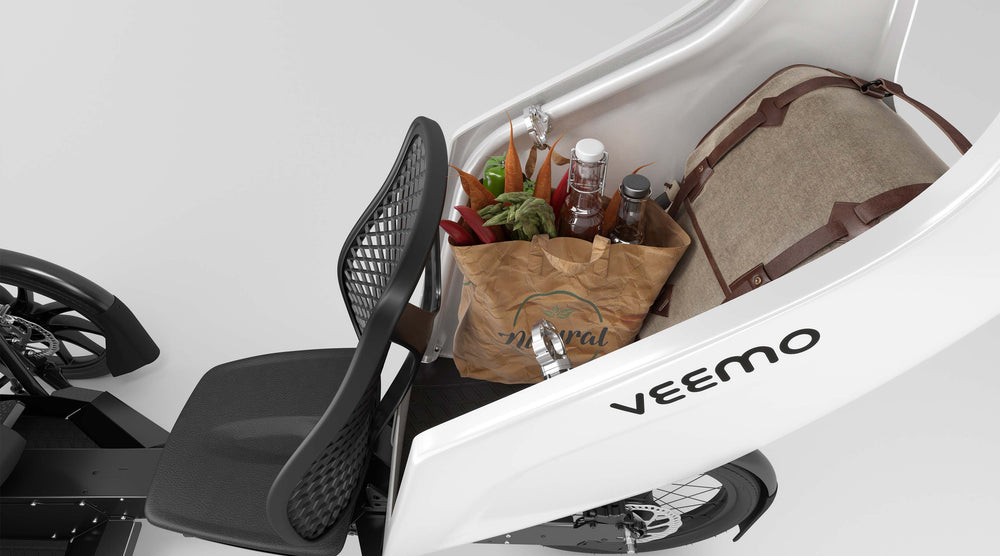
The quality of weather protection varies significantly by model. A fully enclosed electric velomobile like the Veemo SE with doors, windshield, and optional heated cabin approaches car-level weather protection.
Aerodynamic Efficiency
Wind resistance is the dominant force slowing a cyclist above 25 km/h. A velomobile's fairing reduces drag by 70 to 90% compared to an upright bicycle. The practical effect is dramatic: a moderately fit rider in a velomobile can sustain speeds that would require elite fitness on a conventional bike. This efficiency also translates to longer range on electric models.
Safety and Visibility
Velomobiles are significantly more visible to drivers than standard bicycles. The larger profile looks more like a vehicle, which typically means drivers give more space and attention. Three-wheel stability eliminates the risk of falling over at stops or on slippery surfaces. The shell provides some crash protection.
Exercise Benefits
Even electric velomobiles require pedaling. The motor assists but does not replace human effort. This means every trip is also a workout — typically moderate-intensity exercise that is excellent for cardiovascular health. A pedal-assist velomobile hits a sustainable middle ground between a car (zero exercise) and a standard bike (can be too demanding).
Environmental Impact
The carbon footprint of a velomobile is a fraction of a car's. No gasoline, minimal electricity for charging, and manufacturing impact far below any automobile. For short to medium urban trips, velomobiles are one of the lowest-impact transportation options available.
Cost Savings Over Cars
The average cost of owning a car in Canada exceeds $10,000 per year when you include payments, insurance, fuel, maintenance, and parking. A velomobile has no fuel costs, no mandatory insurance, no parking costs in most situations, and minimal maintenance ($200 to $500 annually).
Disadvantages of Velomobiles (Honest Assessment)
Speed Limitations
Electric velomobiles classified as e-bikes are limited to 32 km/h (20 mph) assisted speed. On roads with 50 to 60 km/h speed limits, you will be significantly slower than traffic. This is fine on bike lanes and residential streets but can feel uncomfortable on busier roads without cycling infrastructure.
Size and Storage
Velomobiles are larger than bicycles. Most are 200 to 250 cm long and 80 to 100 cm wide. They do not fit in standard bike racks, and apartment dwellers without a garage face real storage challenges.
Weight
Electric velomobiles weigh 55 to 90 kg — manageable on flat ground but a significant concern if you need to lift the vehicle over curbs or up stairs.
Social Perception
Velomobiles attract attention. Depending on your personality, this is either fun or exhausting. Expect questions from curious pedestrians, double-takes from drivers, and occasional confusion from bylaw enforcement officers who are not sure what classification your vehicle falls under.
Velomobiles vs. E-Bikes: How Do They Compare?
| Feature | Standard E-Bike | Electric Velomobile |
|---|---|---|
| Weather protection | None | Partial to full |
| Stability | Requires balance | Three-wheel, no balance needed |
| Weight | 15–30 kg | 55–90 kg |
| Price | $1,500–5,000 | $4,000–15,000 |
| Storage | Easy (fits in apartment) | Requires garage or dedicated space |
| Visibility in traffic | Low | High (larger profile) |
| Bike lane access | Yes | Yes (most models) |
| Cargo capacity | Limited (rack/panniers) | Moderate (built-in compartment) |
| Year-round riding | Difficult in rain/cold | Practical in most conditions |
If weather never stops you from cycling and storage space is limited, a standard e-bike from EbikeBC's urban collection is the better choice. If weather is the main barrier to cycling or you want car-replacement capability, a velomobile is worth the extra cost and size.
Velomobiles vs. Cars: The Real Comparison
Comparing a velomobile to a car might seem absurd, but for short urban trips, the comparison is valid.
| Feature | Car | Electric Velomobile |
|---|---|---|
| Purchase price | $25,000–50,000+ | $5,000–15,000 |
| Annual operating cost | $8,000–12,000 | $200–500 |
| Speed | Up to speed limit | 25–32 km/h |
| Range | 400–800 km per tank | 30–80 km per charge |
| Passengers | 4–5 | 1 |
| Parking | Expensive, scarce downtown | Bike parking (free) |
| Insurance required | Yes ($1,500–3,000/year) | No (optional) |
| License required | Yes | No |
| Exercise benefit | None | Moderate cardio |
| Environmental impact | High | Minimal |
| Traffic congestion | Subject to gridlock | Uses bike lanes, avoids congestion |
For trips under 15 km in urban areas, the average car trip takes nearly as long as a velomobile trip when you include finding parking. The velomobile costs almost nothing to operate, gives you exercise, and avoids traffic. The car wins on speed, range, and passenger capacity — but those advantages matter less for short daily trips than most people assume.
Legal Status of Velomobiles
Canada
Electric velomobiles that meet power-assisted bicycle (PAB) requirements — 500W motor or less, 32 km/h maximum assisted speed, functional pedals — are classified as bicycles. No license, registration, or insurance required. The Veemo SE and Veemo LT both meet these requirements. Check the Veemo FAQ for province-specific details.
United States
Federal law classifies low-speed electric bicycles (750W or less, 20 mph maximum) as consumer products, not motor vehicles. State laws vary. Most states allow e-bike-classified velomobiles on bike lanes and roads without licensing.
Europe
EU regulations classify electric pedal-assist vehicles with motors of 250W or less and maximum assisted speed of 25 km/h as bicycles. Velomobiles are well-established in the Netherlands, Germany, and Denmark, where cycling infrastructure makes them particularly practical.
How Much Does a Velomobile Cost?
- Human-powered velomobiles: $8,000 to $15,000 for production models. Custom builds start around $15,000.
- Electric commuter velomobiles: $4,500 to $12,000. The Veemo LT starts around $7,495 CAD; the Veemo SE starts around $9,995 CAD.
- DIY kits: $1,500 to $5,000 for materials, plus significant build time.
- Used: $3,000 to $10,000 depending on model, age, and condition.
Additional costs to budget for include shipping ($200–$3,000), accessories ($100–$300), replacement battery after 3–5 years ($500–$1,500), and annual maintenance ($200–$500).
Where to Buy a Velomobile
In North America, the easiest path to a velomobile is through direct-to-consumer manufacturers. For Canadian buyers, Veemo — based in Vancouver and built by ENVO Drive Systems — is the clear choice: designed and built locally with nationwide shipping, local support, and no import duties.
Other North American options include Better Bike (PEBL) and Organic Transit (ELF) in the US. For European-made human-powered velomobiles, you will typically order directly from the manufacturer and arrange international shipping. The EbikeBC team can also advise on the broader e-bike and enclosed trike market in Canada.

Frequently Asked Questions
Ready to Ride Smarter?
The Veemo SE and Veemo LT represent the latest evolution of the electric velomobile — upright seating, full enclosure, and designed for Canadian roads and weather.
Explore Veemo SE View Veemo LT