
IRIS eTrike vs Veemo SE: Specs, Price & Availability Compared
The enclosed electric velomobile has gone from a fringe curiosity to a legitimate vehicle category — and two names keep coming up in the same breath: the Veemo SE, built by ENVO Drive Systems in British Columbia, and the IRIS eTrike, designed by British inventor Grant Sinclair — nephew of the legendary Sir Clive Sinclair of C5 fame. Both promise to replace short car trips with something weather-proof, pedal-assisted, and narrow enough for a bike lane. But these two machines are built on very different philosophies, and only one of them you can actually ride today.
This comparison digs into the specs, the real-world trade-offs, and — critically — the question of availability. Whether you're weighing an upgrade from an urban commuter e-bike or shopping the emerging velomobile category for the first time, here's what you need to know before committing your money.
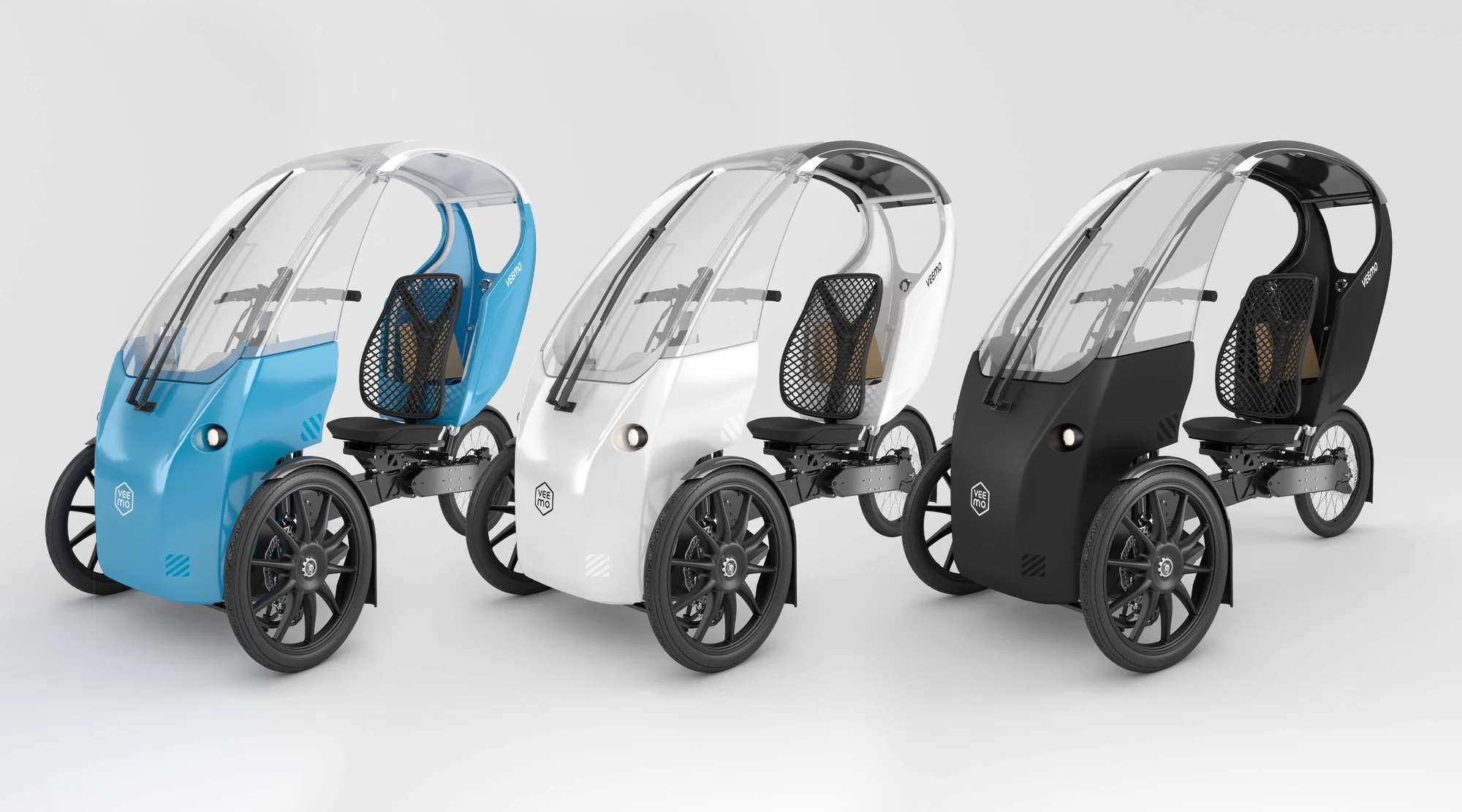
Two Visions of the Enclosed Commuter
The Veemo SE and IRIS eTrike are both pedal-electric trikes with weather protection and more practicality than a conventional e-bike — but their design philosophies diverge sharply.
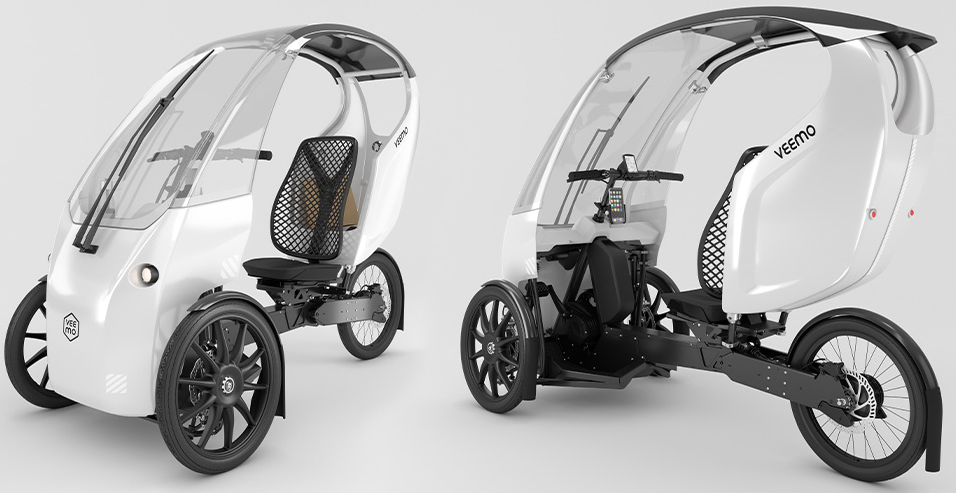
The Veemo SE is a semi-enclosed tadpole trike (two wheels up front, one in the rear) with a fixed roof, a windshield with a power wiper, and an open cockpit that vents naturally. ENVO designed it for Canadian and North American urban conditions — it handles sleet, headwinds, and potholed bike lanes without asking you to give up cycle infrastructure access. With a 750W rear hub motor, hydraulic disc brakes, and independent front and rear suspension, it's a purposeful commuter machine built by a team that also makes the ENVO D50 electric bike and a wide range of urban e-bikes.
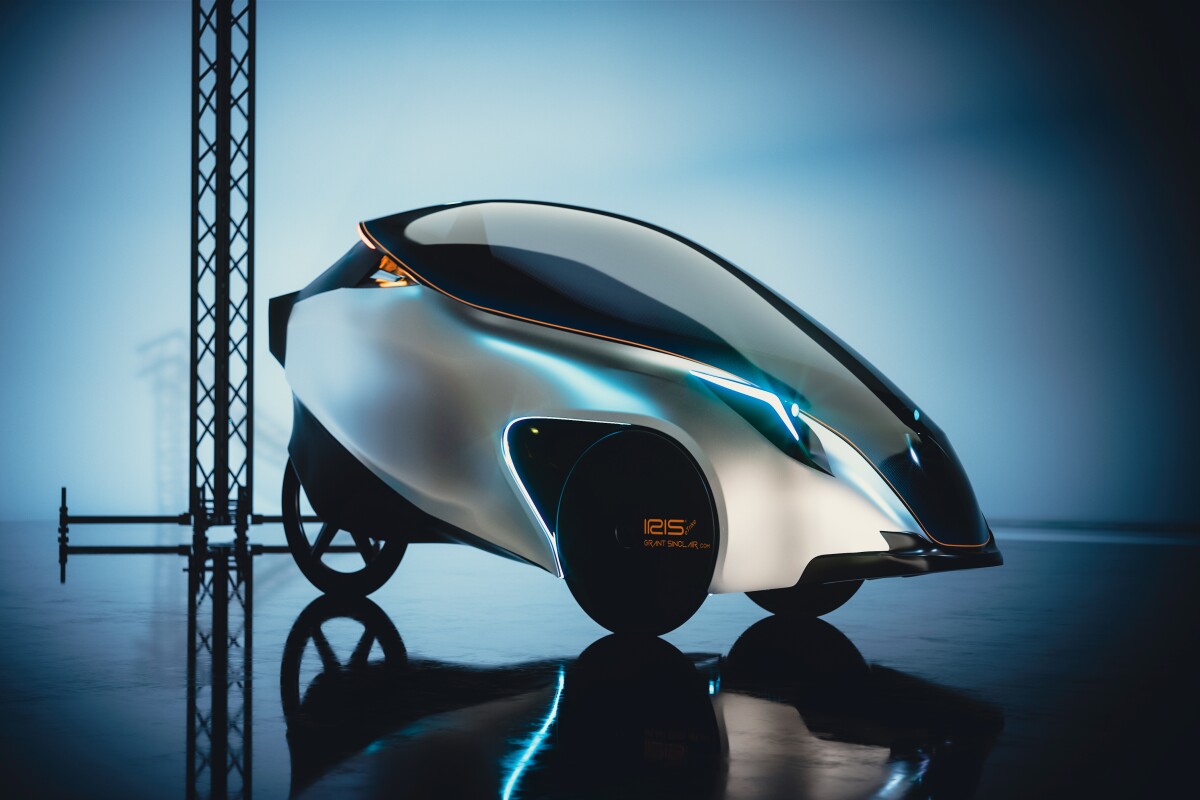
The IRIS eTrike takes a bolder swing. Grant Sinclair — who rode his uncle's infamous Sinclair C5 as a kid and has spent decades thinking about what it should have become — designed a fully-enclosed cabin with a clear hinged Plexiglass canopy, a Bafang mid-drive motor, a HEPA air filtration system, and a 120-degree rearview camera. It's undeniably striking. It's also still a pre-order, with estimated Q2 2026 delivery for new buyers — after originally targeting Q1 2024.
Full Specs Head-to-Head
Here's how the two enclosed e-trikes stack up on paper. Green highlights mark which vehicle wins each category.
| Specification | Veemo SE | IRIS eTrike |
|---|---|---|
| Origin | Canada (ENVO Drive Systems) | UK (Grant Sinclair) |
| Price (USD) | ~$6,999 | ~$6,250 (£4,999) |
| Availability | In stock — ships now | Pre-order, Q2 2026 est. |
| Motor | 750W rear hub (brushless) | Bafang 250W / 500W / 750W mid-drive (buyer's choice) |
| Battery | 48V / 15Ah Li-ion | 48V / 20Ah Li-ion |
| Range | 30–100 km (19–62 mi) | ~50–80 km (30–50 mi, claimed) |
| Top Speed | 32 km/h NA / 25 km/h EU | 48+ km/h (classified as EAPC in UK) |
| Weight | 61 kg (135 lbs) | 50 kg (110 lbs) |
| Dimensions (L × W × H) | 200 × 89 × 150 cm | 260 × 94 × 128 cm |
| Cargo | 60L behind seat | 100L lockable compartment |
| Brakes | Hydraulic disc (203mm / 180mm) | Spyre mechanical disc |
| Suspension | Independent front + rear coil | Not specified |
| Transmission | Shimano Altus 9-speed | 9-speed |
| Enclosure type | Semi-enclosed (fixed roof + windshield) | Fully enclosed (hinged Plexiglass canopy) |
| Air filtration | — | HEPA + carbon filter + cooling |
| Camera | — | 120° rearview camera + smartphone integration |
| Wheels | 20" × 1.75" | 24" front / 26" rear carbon |
| Markets | Canada, USA, Europe — available | UK-focused, international TBD |
Enclosure: Semi vs. Fully Sealed
This is the most visible difference between the two vehicles, and it matters far more than it might seem at first glance.
The Veemo SE's semi-enclosed design gives you a roof and windshield — enough to stay dry in rain, block headwinds, and keep road spray off your face. But it breathes. There's no door, no sealed cabin, and no need for active ventilation. That simplicity pays dividends: no fogging issues, no claustrophobia, natural airflow on warmer days, and an easy exit at traffic lights. For city commuting in a North American or European climate, this covers the vast majority of bad-weather scenarios. You can read more about how ENVO approaches weather-ready commuter design on the ENVO commuter e-bike guide.
The IRIS eTrike goes further: a clear Plexiglass canopy hinges open to let you in, then seals the cabin. Inside, a HEPA and carbon filtration system with active cooling pumps cleaned air through the cabin — a genuinely impressive spec that would make the IRIS particularly appealing to allergy sufferers or commuters in cities with poor air quality. The trade-off is complexity. A sealed canopy means managing internal temperature, preventing condensation, and dealing with a vehicle that's more mechanically intricate to maintain. On any sound e-bike buying guide, complexity and long-term serviceability are factors worth weighing seriously — especially for a vehicle that hasn't entered mass production yet.
Motor, Speed, and Range: Where Things Get Interesting
The IRIS eTrike uses a Bafang mid-drive motor — and it gives buyers a choice of 250W, 500W, or 750W output (with the 750W variant offering 160Nm of torque). Mid-drive motors place the motor at the bottom bracket, which delivers better hill-climbing efficiency, more natural pedalling feel, and easier wheel changes. At 750W, the IRIS claims speeds exceeding 48 km/h under UK EAPC classification — though how this is interpreted under North American regulations remains to be determined.
The Veemo SE uses a 750W rear hub motor delivering 80Nm of torque. Hub motors are simpler, more reliable, and easier to maintain — important considerations for a daily commuter. The Veemo tops out at 32 km/h in North America (25 km/h in EU mode), keeping it comfortably in the pedelec/Class 1 bracket that grants access to bike infrastructure. Its claimed range of 30–100 km on a 48V/15Ah pack gives a wide window, depending on terrain, rider weight, and assist level. Proper battery management — covered in ENVO's battery care guide — can push you toward the top of that range.
The IRIS's 48V/20Ah battery is larger by raw capacity, but with a claimed range of 50–80 km (varying by source), it doesn't significantly outpace the Veemo's real-world figures. Both vehicles are suitable for commutes in the 20–40 km round-trip range without mid-day charging.
Size, Practicality, and Daily Life
The Veemo SE is notably more compact than the IRIS eTrike: 200 cm long versus 260 cm, and lighter at 61 kg versus 50 kg. Wait — the IRIS is actually 11 kg lighter despite being 60 cm longer, which reflects its EPP foam body construction versus Veemo's more traditional materials. Both will fit in most cycle parking areas; the IRIS's extra length may be a consideration in tighter city environments.
Cargo tells a different story: the IRIS wins with 100L of lockable onboard storage — nearly double the Veemo's 60L. That's a meaningful difference if grocery runs and errand trips are part of your use case. If you need even more hauling capacity, the Veemo LT cargo trike is worth considering as an alternative — it's purpose-built for two passengers and cargo alike, and sits in the broader electric cargo bike category.
On the maintenance front, the Veemo's hydraulic disc brakes are a clear advantage over the IRIS's Spyre mechanical discs — hydros offer better modulation, require less hand force, and self-adjust as pads wear. For a vehicle used daily in variable weather, this is a practical edge. Both vehicles run 9-speed drivetrains, though the IRIS specifies Shimano A530 SPD pedals suggesting a more performance-oriented pedalling experience. Good maintenance habits apply to both — ENVO's maintenance tips guide covers fundamentals that apply across enclosed e-trikes.
The Availability Problem
This is where the comparison becomes stark. The Veemo SE is in stock. You can order from veemo.ca today, arrange delivery to Canada, the USA, or Europe, and be riding within weeks. ENVO has shipped vehicles, built a support network, and operates as a mature manufacturer across multiple product lines visible on EbikeBC and beyond.
The IRIS eTrike is a compelling design that has been in development since a prototype first appeared in 2017. The production version was announced in 2023 with a Q1 2024 delivery target. That target has now shifted to Q2 2026. For early-bird buyers who've had their deposits sitting for two-plus years, that's a difficult situation. For new buyers considering a pre-order today, it's a significant risk to weigh against the vehicle's genuine appeal. Grant Sinclair has stated the vehicle is being "prepared for mass production," but mass production readiness and actual delivery are different milestones.
- You need a vehicle for your commute in the next 6–12 months
- You're based outside the UK and need confirmed import/regulatory approval
- You want established dealer support and a proven service network
- You're risk-averse about pre-ordering from a single-product startup
- North American speed regulations (32 km/h Class 1) are important to your infrastructure access
Pros and Cons at a Glance
Veemo SE — Strengths
- Available to buy and ride right now
- Proven manufacturer with support network
- Hydraulic disc brakes
- Independent front and rear suspension
- Compact 200cm footprint
- Ships to Canada, USA, and Europe
- Semi-open cockpit — no fogging or HVAC issues
IRIS eTrike — Strengths
- Fully enclosed cabin — maximum weather protection
- HEPA + carbon air filtration with cooling
- Bafang mid-drive motor (better torque delivery)
- Larger 20Ah battery
- 100L cargo — more load capacity
- 120° rearview camera
- Lighter at 50 kg
Veemo SE — Limitations
- Semi-enclosed only — no full canopy option
- Smaller 15Ah battery
- Rear hub motor (less hill-climbing efficiency)
- 60L cargo (less than IRIS)
- Heavier at 61 kg
IRIS eTrike — Limitations
- Pre-order only — Q2 2026 est. (after delays)
- No proven production track record
- Longer at 260cm — harder to park in tight spaces
- Mechanical disc brakes (vs Veemo's hydraulic)
- UK-focused — North American availability unclear
- Speed classification uncertain outside UK

The Verdict
Our Take
Both the Veemo SE and the IRIS eTrike represent the same exciting idea: a weather-proof, pedal-electric vehicle that can genuinely replace a car for urban commuting. If you're comparing features on paper, the IRIS is arguably more ambitious — the full enclosure, mid-drive motor, HEPA filtration, and rearview camera add up to a more comprehensive specification.
But specifications only matter when the vehicle exists in your garage. The Veemo SE is a real product, from a real manufacturer, shipping today. It has hydraulic disc brakes, proper suspension, and a semi-enclosed design that handles real commutes in real weather. For buyers in Canada, the USA, or Europe who want to ditch car trips now — not in 2027 — the Veemo is the clear choice.
The IRIS eTrike is genuinely worth watching. If Grant Sinclair delivers on its production promises, it could be a compelling alternative — particularly in the UK market where its EAPC classification gives it a speed advantage. But it's a pre-order, with a history of delays, from a single-product design company. Order accordingly.
Frequently Asked Questions
As of March 2026, the IRIS eTrike is only confirmed for the UK market under EAPC regulations. Its regulatory status in North America — and whether it would qualify as a Class 1, Class 2, or Class 3 e-bike — has not been formally established. The Veemo SE is fully approved and in stock for Canadian and US buyers through veemo.ca.
Under UK EAPC rules, the IRIS's 750W Bafang mid-drive can propel the vehicle to 48+ km/h, which is faster than the Veemo SE's 32 km/h limit in North America. In EU mode, the Veemo caps at 25 km/h in line with standard pedelec regulations. Higher speeds on public bike infrastructure may not be legal everywhere — check your local regulations.
Hub motors (like the Veemo's 750W rear unit) are simpler, lower maintenance, and very reliable — ideal for flat-to-moderate urban terrain. Mid-drive motors (like the IRIS's Bafang units) multiply the rider's gear selection, offering better hill-climbing and more efficient power use over varied terrain. For flat city commuting, the difference is minimal. For hilly routes, mid-drive has an edge. The EbikeBC buying guides cover this in more depth.
In Canada and most of the USA, the Veemo SE is classified as a pedelec/e-bike and does not require a driver's licence, registration, or insurance in most jurisdictions. It qualifies for bike lane access. Rules vary by province and state — confirm your local regulations before riding. The IRIS eTrike in the UK similarly requires no licence under EAPC rules.
The enclosed velomobile market is still small. Beyond the Veemo SE and IRIS eTrike, options like the Organic Transit ELF and the Bülk cargo trike occupy adjacent niches. EbikeBC and the broader ENVO electric bike lineup also offer conventional e-bikes for riders whose commutes don't require full enclosure. See our best urban e-bikes guide for a wider look at the category.